The LCC Nursing Program is an Associate Degree program comprised of two levels. Level I is the first year of the Associate Degree Nursing Program. Students have the option to sit for the PN licensure exam (NCLEX-PN) upon the successful completion of Level I. Level II is the second year of the program. Students who have completed Level I may go directly on to Level II. Level II is also open to L.P.N.’s seeking an Associate Degree in Nursing and transfer students. Level II completers are awarded an A.A.S. Degree in Nursing and qualify to sit for the R.N. licensure exam (NCLEX-RN). For the Nursing degree plan, please consult the Degree and Certificate section of this catalog. NOTE: Students must be 16 years of age or older to qualify to take the licensure examination. Over the course of five semesters of full-time coursework, students progress through a sequence of courses, moving from basic to complex. Theory classes are provided on campus, along with a significant number of lab hours in which students practice and perfect new skills for their profession. Students are provided a large number of clinical experiences from local nursing homes and hospitals to acute care experiences at a distance in adult health, obstetrics, pediatrics, and psychiatric nursing. The program is offered in a full-time format on the LCC campus, beginning in August and ending in May. This Associate Degree program is comprised of two levels. After successful completion of Level I, students have the option to sit for the PN licensure exam (NCLEX-PN). Level II is the second year of the program. Once students complete the program and become an RN, they are encouraged to continue their education to achieve a Bachelor of Science in Nursing (BSN) and even a Master of Science in Nursing (MSN). Program graduates will be able to:
- Provide safe, quality evidence-based patient-centered nursing care in a variety of healthcare settings to diverse patient populations.
- Engage in critical thinking and clinical reasoning to make patient-centered care decisions.
- Implement quality measures to improve patient care.
- Participate in collaborative relationships with members of the interdisciplinary team, the patient, and the patient’s support persons.
- Use information management principles, techniques, and systems, and patient care technology to communicate, manage knowledge, mitigate error, and support decision-making.
- Provide leadership in a variety of healthcare settings for diverse patient populations.
- Assimilate professional, legal, and ethical guidelines in practice as a professional nurse.
- Promote a culture of caring to provide holistic, compassionate, culturally competent care.
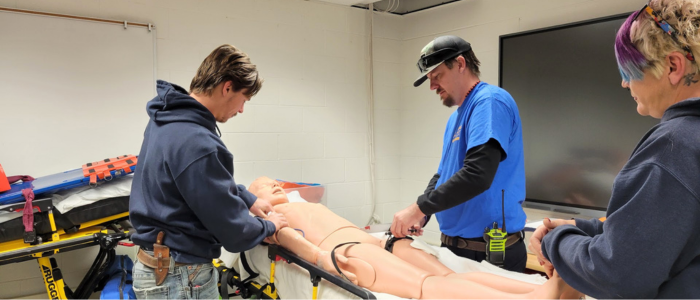
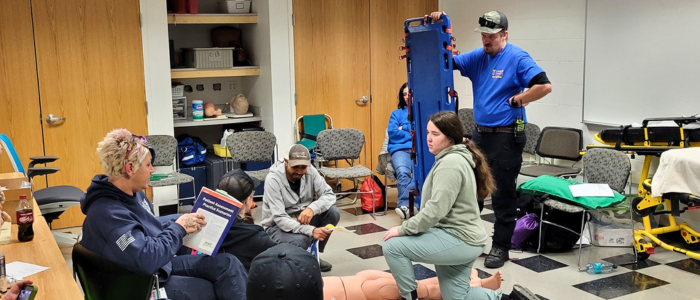
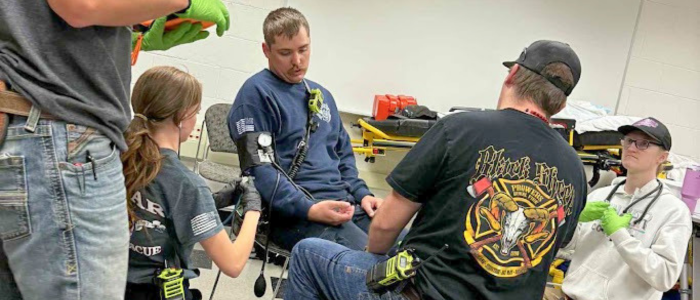
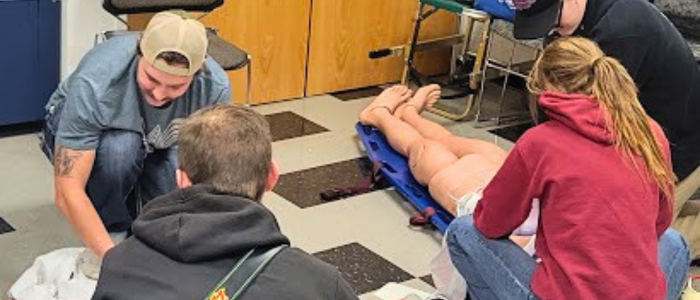
See the full catalog page for Nursing, A.A.S. This Certificate builds upon the knowledge gained in the basic skills certificate. The curriculum includes advanced trauma and medical assessment as well as treatment of the sick and injured. Successful completion of the Emergency Medical Technician - Advanced certificate allows a student to sit for the National Registry of Emergency Medical Technicians Advanced Exam as well as take the National Registry of EMTs Advanced level practical examination. In most cases, EMS students qualify for partial or full scholarships. Certificate recipients will be able to:
- Examine and analyze the nature and seriousness of the patient’s condition or the extent of injuries.
- Demonstrate how to assess the need for emergency medical care and perform appropriate medical care based on assessment findings of the patient’s condition.
- Demonstrate how to lift, move, position, and otherwise handle the patient to minimize discomfort and prevent further injury.
- Define and employ the roles and responsibilities of an advanced emergency medical technician within the Emergency Medical Services (EMS) system.
- Perform the basic concepts of development, pathophysiology, and pharmacology for assessment and management of emergency patients.
- Demonstrate how to properly administer medications per industry standards.
- Perform advanced airway management for adults, children, and infants. Perform CPR, both 1 and 2 persons for adult, child, and infant to Healthcare provider level consistent with American Heart Association guidelines.
- Demonstrate how to effectively communicate with patients, peers, and healthcare professionals.
See the full catalog page for Emergency Medical Technician Advanced Certificate Successful completion of the Emergency Medical Technician - Basic certificate allows a student to sit for the National Registry of Emergency Medical Technicians Basic Exam. The curriculum includes basic trauma and medical assessment as well as treatment of the sick and injured. In most cases, EMS students qualify for partial or full scholarships. Certificate recipients will be able to:
- Demonstrate the proper donning and doffing of protective gear appropriate for the Emergency Medical Technician (EMT) and situation.
- Assess, manage, and stabilize patients of all ages and demographics with medical and traumatic emergencies.
- Perform basic airway management and perform CPR, both 1 and 2 persons, for adult, child, and infant to Healthcare provider level consistent with American Heart Association guidelines.
- Demonstrate the roles and responsibilities of an emergency medical technician (EMT) within the Emergency Medical Services (EMS) system.
- Demonstrate the knowledge of triage and assigning patients to the appropriate level facility.
- Demonstrate the ability to interact with other responders appropriately, including giving and taking advice on patient care.
- Demonstrate the ability to interact and collaborate as a member of a team.
- Demonstrate the ability to complete a patient care report, including summation of treatment provided to the receiving facility or transporting ambulance.
- Perform safety management principles at the scene of an emergency.
See the full catalog page for Emergency Medical Technician Basic Certificate The Nurse Aide certificate prepares a student to enter the nursing occupation at its most basic level, as a Nurse Aide. Successful completion of the course qualifies the student to take the National Nurse Aide Assessment Program (NNAAP) Examination. This program prepares students for employment as nurse aides in hospitals, skilled care and other health care facilities. Students will learn to become direct caregivers as a part of a team. Entering students must pass a background check through LCC prior to enrollment. Additionally, they must complete:
- Pass drug and background check.
- AHA CPR (Basic Life Support for Health Care Providers)
- Provide documentation of immunization
- 2 Doses MMR or Titer
- 3 Doses Hepatitis B or Titer
- 2 Doses of Varicella or Titer
- Tdap
- COVID Vaccination
- Seasonal Flu Vaccine
- Current TB test
Upon successful completion of the program, students will be eligible to take the Colorado National Nurse Aide Assessment Program (NNAAP) for certification through the Board of Nursing. Approximately an eight week course of study. Certificate recipients will be able to:
- Establish and employ effective communication techniques and interact competently with clients and the interdisciplinary tea on a one-on-one basis.
- Demonstrate sensitivity to clients’ emotional, social and mental health needs through skillful, directed interactions.
- Discuss and prescribe the process of motivating and assisting clients to attain and maintain independence while recognizing each individuals’ individual capabilities in regards to ADLs, hygiene, grooming, nutrition and elimination.
- Recall and employ knowledge and skills that support and promote each client’s rights as well as respect for the client as an individual.
- Illustrate appropriate observational and documentation skills needed in the assessment of clients’ health, physical condition and well-being.
- Demonstrate and apply professional employability skills, such as the importance of being timely and providing proficient, quality care for clients according to their care plan(s).
- Identify, discuss, employ and adhere to required proficiencies of the State Board of Nursing (SBON) Chapter 11 Rules and Regulations for Approval of Nurse Aide Training Programs.
See the full catalog page for Nurse Aide Certificate